
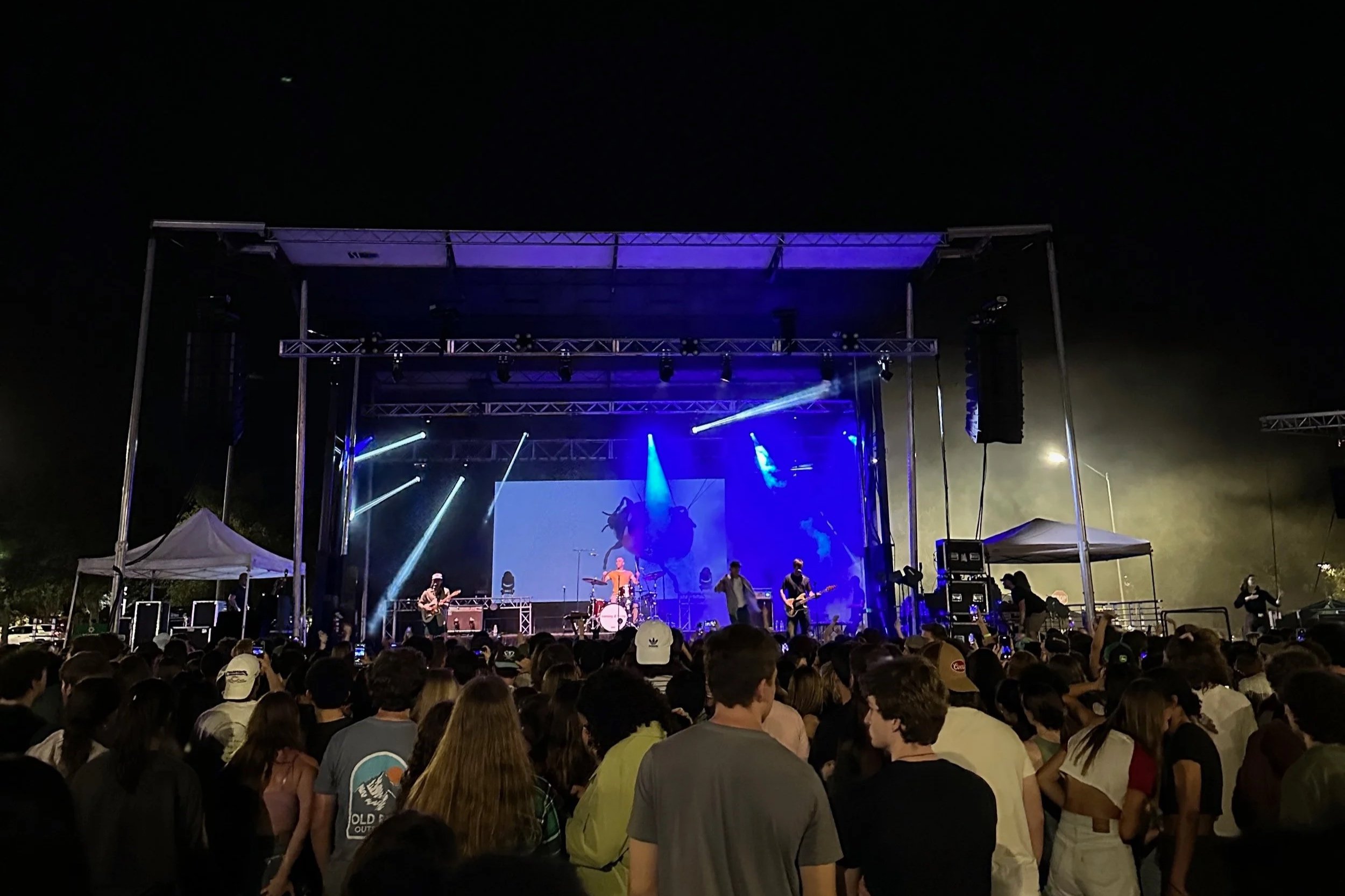
It’s the start of the fall semester on college campuses. The best time of the year! Across the country, many staff teams are planning major campus events. My career journey started in large-scale college events. When you spend hundreds of hours prepping for a 60-minute music/comedy/speaker headliner, or community carnival, or parade, or half marathon, it’s also your job to think through all the contingencies to ensure a safe experience for attendees and the artists.
This post shares 5 lessons learned that every event planner should apply to event preparation and execution through a business continuity and emergency management lens.
1: Collaborate with All Safety Stakeholders
I took great pride in the event strategy and design. Every aspect of the design involved key stakeholders, who could provide input and guidance for the best experience.

I didn’t always love it when their guidance meant spending additional money or required time to coordinate additional resources, but I knew it was critical to the safety of my team and the patrons. My strategy: First, organize community planning meetings with all key collaborators. Second, connect individually with every department before the first meeting. Predict the questions you’re going to be asked. Trust me, the last thing you want is for critical questions to be asked in the community planning meeting that you’re not prepared to answer publicly. Also, it’s OK to not have all the answers initially. Remember, they’re the experts, but everyone plays a role in ensuring a safe experience for your staff and the event patrons. There’s a saying: you never want to be trading business cards with emergency personnel during an emergency.
Key safety collaborators: Police, Security, Fire, EMS, Local Officials, Leadership, Risk Management, Legal, Utilities Service Providers, Housekeeping/Grounds, Venue, General Counsel, and Emergency Management.
Part two of this blog will discuss the unique functions of each of these safety collaborators.
2. Create an Incident Response Plan and a Business Continuity Plan
More than once, I have had to consider alternate vendor solutions because hurricanes/tropical storms impacted a major event. When a disruption occurs to your standard operations, do you have a plan ready? Did you create an incident response plan to guide your responses? Do you have a plan for long-term impact and ripple effects? Here’s how my team and I tackled these decisions. First, evaluate the safety of your staff and patrons. Second, act quickly. What are national experts saying? E.g. weather. What contract provisions will support your decision-making and response? What other organization departments are involved in the decision?
I highly recommend having an incident response plan and a business continuity plan for your specific department and organization.
Key aspects of the incident response plan: Weather Forecast, radio communication procedures and channels, ICS forms, Emergency Operations Center, Surveillance, Vendor contacts, Evacuation Procedures, Emergency Notification System, Reunification, Parking, and a plan for demonstrators and protestors.
Key aspects of the business continuity plan: Risk assessment, the department’s critical functions, key contacts, internal and external dependencies, key resources, and critical IT equipment and applications.
3. Utilize Risk Management Strategies
As you assess the risk of your signature event, determine whether any risk management strategies apply. Key risk strategies include avoidance, reduction, transfer, and acceptance. Many years ago, I hired a vendor for rock wall service. When the woman climbed up the rock wall, she realized she was not harnessed, became scared, and started climbing down before the vendor could reach her. She fell before she reached the bottom. The vendor had been used many times prior. An incident review led to new additional safety practices to reduce the risk, including mandatory bike racks to control entry around the rock wall, soft landing pads, and a reduced number of people in the waiting zone for harnessing. The event world has countless inherent risks. I recommend conducting a risk assessment of your signature events once a year to ensure you understand your risks and have best practices in place to manage your risk relationship.
A common risk mitigation strategy is “transfer,” which protects individuals and businesses from unexpected, large financial losses by shifting risk to an insurance company.
A few insurance standards that should be considered with every event and every vendor:
Your Organization:
Your Organization’s General Insurance Policy (showcased in a Certificate of Insurance), Event Cancellation Insurance, Rain Insurance, and Vehicle Insurance.
The Vendor:
The Vendor’s General Insurance Policy (showcased in a Certificate of Insurance) with limits matching your organization’s requirements and your event’s needs, and Vehicle Insurance (if relevant). Have I experienced a vendor accidentally running over a property barrier? Oh yeah.
Regulatory Considerations: It’s your organization’s responsibility to understand how any applicable regulations affect your event. What city, county, state, and federal regulations have a direct impact on your event? Below are examples of regulatory impacts I have experienced across two states.
4. Permits & Licensing
Special Event Permit: Main permit issued by the local city/county municipality governing public space usage, road closures, and overall event operations.
Noise & Amplified Sound Permits: Mandates acceptable decibel levels, directional speaker placement, and strictly enforced curfew times. Is your organization also prepared for the disruption? My team once moved our event to keep the peace within our organization. One staff member was frustrated by the noise during the sound checks. Using a decibel reader in the employee’s office area, we couldn’t even identify the noise at max concert volume. Another year, the event was at risk of running late, and our local police team notified us that if we ran over and calls flooded dispatch related to our event, they could have to shut down the event.
Liquor & Alcohol Control: Requires state/local liquor licenses, designated consumption zones, ID verification protocols, and certified bartenders.
Food & Public Health Permits: Temporary food handler permits for vendors, mandatory handwashing stations, safe water access, and food temperature control inspections. Organizations I worked at in the past often asked vendors to also showcase their city/state business license and Certificate of Insurance.
Safety, Life Safety, & Structural Standards
Capacity & Egress: Strict adherence to local building and fire codes regarding maximum occupant loads, clear ingress/egress routes, illuminated emergency exit signs, and panic hardware. In some provinces and event spaces, a fire marshal also partially determines this.
Temporary Structures: Formal engineering certifications and inspections for temporary stages, heavy light/sound rigging, tents, scaffolding, staking, generator use with grounding, and carnival rides (certified by state amusement ride inspectors). At one organization, a vendor set up a tent with stakes and may have struck a gas line, requiring evacuation of several buildings and disrupting operations.
Crowd Management: Dedicated security plans, crowd control barriers (e.g., crash barricades, sometimes called blow-through barricades, at stage fronts), de-escalation protocols, and clear physical buffers to prevent crowd surges. At a concert I attended many years ago, my fearless boss, who was 5 feet 2, was in the middle of a crowd directing patrons not to crowd surf. Fearless! AT my concerts, we also planned to provide free water to participants. Well, what happens to people in the front of the stage? They’re usually not willing to give up their place. Our team provided water to those in the front of the stage to ensure they also had hydration opportunities. Even so, we still saw patrons who needed emergency medical care.
Medical & Environmental Planning
Emergency Medical Services (EMS): Requirements for dedicated first-aid stations, certified paramedics, and clear vehicle access lanes based on overall event attendance numbers.
Weather & Evacuation Contingencies: Mandatory severe weather monitoring plans (for high winds, lightning, extreme heat) and trigger thresholds for stage/tent evacuation.
Accessibility (ADA): Compliance with disability standards, including wheelchair-accessible viewing areas, accessible porta-potties, clear ramps, ramps for stages, and stable ground surface paths.
In each of these categories, I could provide story after story. I highly recommend taking the time to account for all of these factors to ensure the safety of your staff, volunteers, and patrons.
5. Contractual Language Matters
Imagine this. You’re an event planner; it’s five days before your $250,000 event, and a hurricane is headed your way. Yikes! Now it’s three days out, and the hurricane has a direct path to you and your city. Your organization has decided to cease operations for the duration of the storm, except for essential staff. More than once, I've had tropical storms and hurricanes impact my major events. We knew the storm was approaching, and we typically only had a couple of days to understand its potential impact and anticipated path. This often meant high-value signature events, planned with a spending estimate of $200,000 and planned for months to a year, were also in the direct path.
How do your contracts protect not only your events but the organization? In every major contract, and even in some minor contracts, we could always expect heavy negotiations around the following contractual clauses: Date and Time, Acts of God, Indemnification, Cancellation, Insurance, Force Majeure, Labor Laws, Applicable Laws, and Jurisdiction. Without fail, my organization’s lawyers and the vendor’s management/lawyer team would go back and forth until all parties were satisfied. Now, about that hurricane scenario; time is of the essence. A hurricane is often considered an Act of God clause or Force Majeure, and you’re likely to cancel the contract or reschedule. Before you pick up the phone to call the vendor, it’s probably best you do a quick review with your organization’s general counsel.
Then again, there will always be considerations you and your vendor may not have discussed. One year, a vendor determined the wind gusts were too high for their equipment. At the end of the day, they’re the expert on their equipment and any state regulations. Think proactively about expected and unexpected risk-response strategies: avoid, mitigate, accept, or transfer.
Waivers, Vendor Waivers, Labor Laws
When planning an event, also consider waivers. When employees or clients participate in activities that increase liability for the individual and the organization, use a waiver template to communicate the inherent risks and the organization's potential negligence to the participant. Nothing is scarier than an injury on a vendor’s equipment or during an activity you’re hosting. First question: is the person ok? Yes, great. Second, do they need any medical resources? Third, fill out an incident form and record as much relevant information as possible for documentation. Fourth, did we share the inherent risks of the activity via waiver, and can we locate any signed document? Hold on to that waiver language. If there is a lawsuit filing, you’ll need your documentation and waiver. Also, anticipate that the vendor may want to collaborate on waiver language and/or use their own waiver.
Key Partners: Risk Management or General Counsel
Benchmark
At the end of the day, the entertainment talent you hire and the vendors you bring onsite to your organization’s property are an indirect representation of your organization. This is where you can use benchmarking to your advantage. Where has the vendor or the entertainment recently performed or provided services? Using lessons learned from other organizations can help with planning and event deliverables. E.g., if a performer is notoriously late, how do you plan and mitigate delays through conversations with their management? If you’re bringing an entertainer who is notorious for entering the crowd, what additional safety standards are needed? Have you built this into your budget in advance?
Key benchmarking: Artist Tour, Similar Event Venues, Similar Organizations who Offer Similar Services